
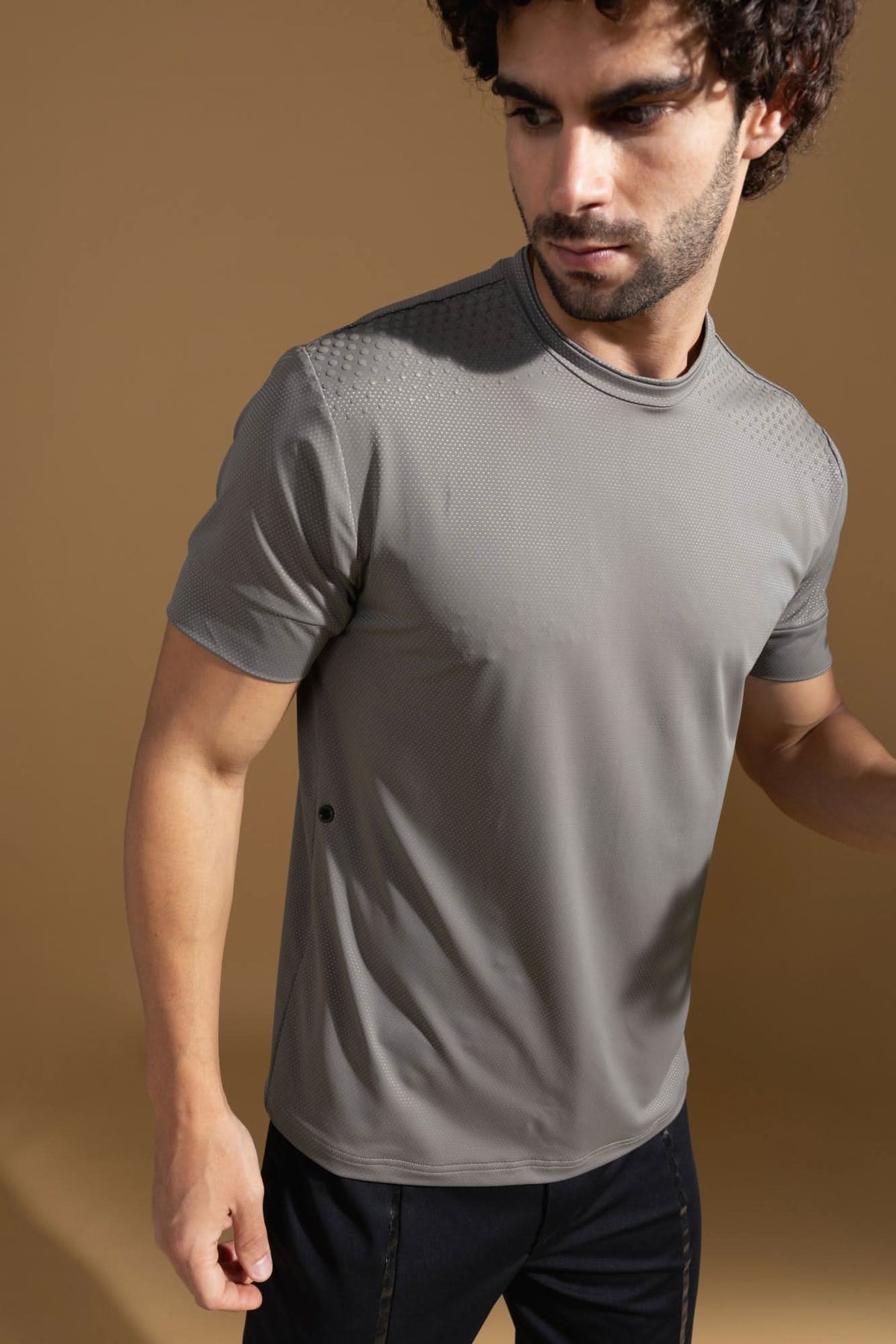
Most men choose a gym tee by fit and colour and never read the fabric label. In Indian heat that is an expensive habit: the wrong fabric turns heavy and damp before your warm-up is over. The fabric decides how fast a tee dries, whether it clings, how freely your arms move on an overhead press, and how it holds up after fifty washes. This guide covers what to check, and how to read the numbers on a label.
Why fabric matters more than fit
A well-cut tee in the wrong fabric still fails you. Cotton absorbs sweat and holds it, so a cotton tee gets heavier as you train, stays wet long after you stop and rubs at the seams. Synthetic performance fabrics such as nylon and polyester absorb far less water. Sweat spreads across the surface and evaporates, so the tee stays lighter and dries faster.
Five things to check before you buy a workout tee
1. Breathability and ventilation
Airflow comes from how the fabric is constructed, not just how thin it is. Mesh knits have small open cells that let air pass through. Also look for ventilation in the places you sweat most: eyelets under the sleeves, mesh panels at the back or side seams.
2. Moisture-wicking
This is the biggest upgrade over cotton. A wicking fabric moves sweat from your skin to the outer surface of the tee, where it evaporates. Most nylon and polyester knits do this well, but check that the product page says “moisture-wicking” or “quick-drying” rather than assuming it.
3. Stretch, and how much
Spandex (also sold as elastane or Lycra) gives a fabric stretch and recovery. The percentage tells you how much: around 5% gives comfortable give, while 10–16% gives much more stretch and a closer, lightly compressive feel. A tee that stretches only side to side will ride up the moment you lift your arms.
4. Weight (GSM)
GSM means grams per square metre, the standard measure of fabric weight. For training in heat, lighter is usually better: roughly 140–170 GSM feels airy, 180–200 GSM feels more structured and holds its shape off the gym floor, and 230 GSM and above is for structured shorts, layers and cooler weather. The lighter the fabric, the less sweat it can hold and the faster it dries.
5. Durability and odour
Synthetic fabrics can hold odour if they aren't cared for. Wash them inside out in cold water and skip fabric softener, which coats the fibres and blocks wicking. On durability, look at the weave: dobby and ripstop constructions resist abrasion and snagging better than plain knits.
Decoding fabric names
- Mesh: an open knit with visible cells for maximum airflow. Best for high-sweat sessions.
- Interlock: a tight double knit that is smooth on both sides, holds its shape and feels substantial.
- Dobby: a weave with a small repeating texture woven in. It adds structure and abrasion resistance.
- Ripstop: a woven fabric with a reinforced grid that stops small tears from spreading. It is common in lightweight shorts.
- Fleece: a brushed knit that traps warmth. Nylon fleece with spandex stays light and stretchy.
Cotton vs performance fabric
Cotton is comfortable for lounging and the wrong choice for training. It soaks up sweat, dries slowly and loses shape with repeated stretching and washing. Performance fabrics are built to manage sweat, move with you and recover after every wash. Replacing even two or three cotton tees in your gym rotation makes a noticeable difference to how a session feels.
How XALT fabrics compare
Here is how the fabrics in the XALT range line up against the checklist above:
| Style | Fabric | Composition | Weight | Best for |
|---|---|---|---|---|
| Aerodynamic Pulse Tee | W Mesh knit | 95% nylon, 5% spandex | 150 GSM | Hot, humid sessions and running |
| Pulse Point Mesh Tee | W Mesh Oxford | 77% nylon, 7% polyester, 16% spandex | 160 GSM | High-sweat training with stretch |
| Urban Grid V-neck | Poly Brick Dobby | 100% polyester | 160 GSM | Everyday training and city wear |
| Stealth Tech Tee | Nylon Dobby | 89% nylon, 11% spandex | 190 GSM | Gym-to-street, travel |
| Axiom Polo | Terry knit with rib | 67% cotton, 30% polyester, 3% spandex | 240 GSM | Golf, office, weekends |
If you train in peak summer or in a humid city, start with the 150–160 GSM mesh tees. If you want one tee that also works for a commute or a flight, the 190 GSM Stealth Tech Tee keeps a crisper shape. You can see the full fabric breakdown on our Fabrics page.
FAQ
What fabric is best for gym t-shirts in hot, humid weather?
A lightweight mesh knit in nylon or polyester, ideally under 170 GSM, with ventilation under the arms. It moves air and dries faster than cotton.
Is polyester or cotton better for a workout tee?
For training, polyester and nylon blends are better. They wick sweat instead of absorbing it, dry faster and keep their shape through repeated washing.
What does GSM mean on a t-shirt?
Grams per square metre, a measure of fabric weight. Lower GSM means a lighter, airier fabric; higher GSM means more structure and warmth.
How much spandex should a gym tee have?
About 5% for comfortable give, and 10–16% for more stretch and a closer fit. Check whether the product says 4-way stretch if you lift overhead.
How should I wash performance tees?
Inside out, in cold water, without bleach or fabric softener. Lay flat or hang to dry.
Ready to upgrade your training kit? Browse all men's gym t-shirts or pair them with our gym and running shorts.
Share:
Complete Guide to Plant Based Proteins